Your Sales Demos Contain More Data Than Your CRM
Sales calls and product demos contain rich deal signals that rarely make it into the CRM. Multimodal AI extracts objections, pricing, competitors, promises, next steps, and screen-level evidence from recorded demos.
Your CRM is supposed to be the source of truth.
But in most revenue teams, the real source of truth lives somewhere else: in the calls.
Discovery calls. Product demos. Pricing calls. Technical walkthroughs. Mutual action plan reviews. Customer success meetings. Expansion conversations. Recorded Looms. Screen shares. Webinar follow-ups.
These recordings contain the signals that explain why deals move, stall, expand, or die.
The problem is that most of that signal never becomes structured data.
Salesforce describes conversation intelligence as a way to automatically analyze sales conversations and highlight key moments such as objections, pricing, next steps, and decision-maker mentions. (Salesforce) Gong also positions revenue intelligence around customer insights, revenue graphs, workflow automation, and specialized AI agents for go-to-market teams. (Gong)
That market exists for a reason. Sales conversations are full of data. But most systems still miss one critical layer: what happens on screen.
Sales calls are multimodal
A sales demo is not just audio.
It includes:
- What the rep says
- What the prospect asks
- What appears in the product
- What is shown in the slide deck
- What pricing is displayed
- What features are demonstrated
- What objections appear in chat
- What competitors are mentioned
- What workflows are actually shown
- What promises are made
- What next steps are agreed
A transcript captures the conversation. It does not fully capture the demo.
That matters because many deal-critical moments are visual.
The rep may say, “We support this workflow,” while showing a partial workaround. The buyer may ask for a feature, and the rep may navigate away without addressing it. The pricing slide may show a condition that is not mentioned verbally. The product screen may reveal whether the promised capability actually exists. The next step may appear in chat, not in speech.
This is why revenue teams need multimodal sales intelligence, not just call transcription.
The data gap after every demo
After a sales call, a rep usually writes notes manually.
Those notes are incomplete by design. The rep is busy, biased, and already moving to the next task. Important details get compressed into a few lines:
“Good call. Interested. Follow up next week.”
But the recording contains far more:
- The exact objection
- The moment the buyer hesitated
- The competitor they compared against
- The integration they care about
- The feature that created urgency
- The budget concern
- The security requirement
- The procurement blocker
- The promise the rep made
- The stakeholder who went quiet
- The next step that was agreed
If this data does not reach the CRM, the company loses operational memory.
Forecasting becomes weaker. Coaching becomes anecdotal. Product feedback becomes fragmented. Handoffs become risky. Customer success starts with missing context.
Multimodal AI makes demos queryable
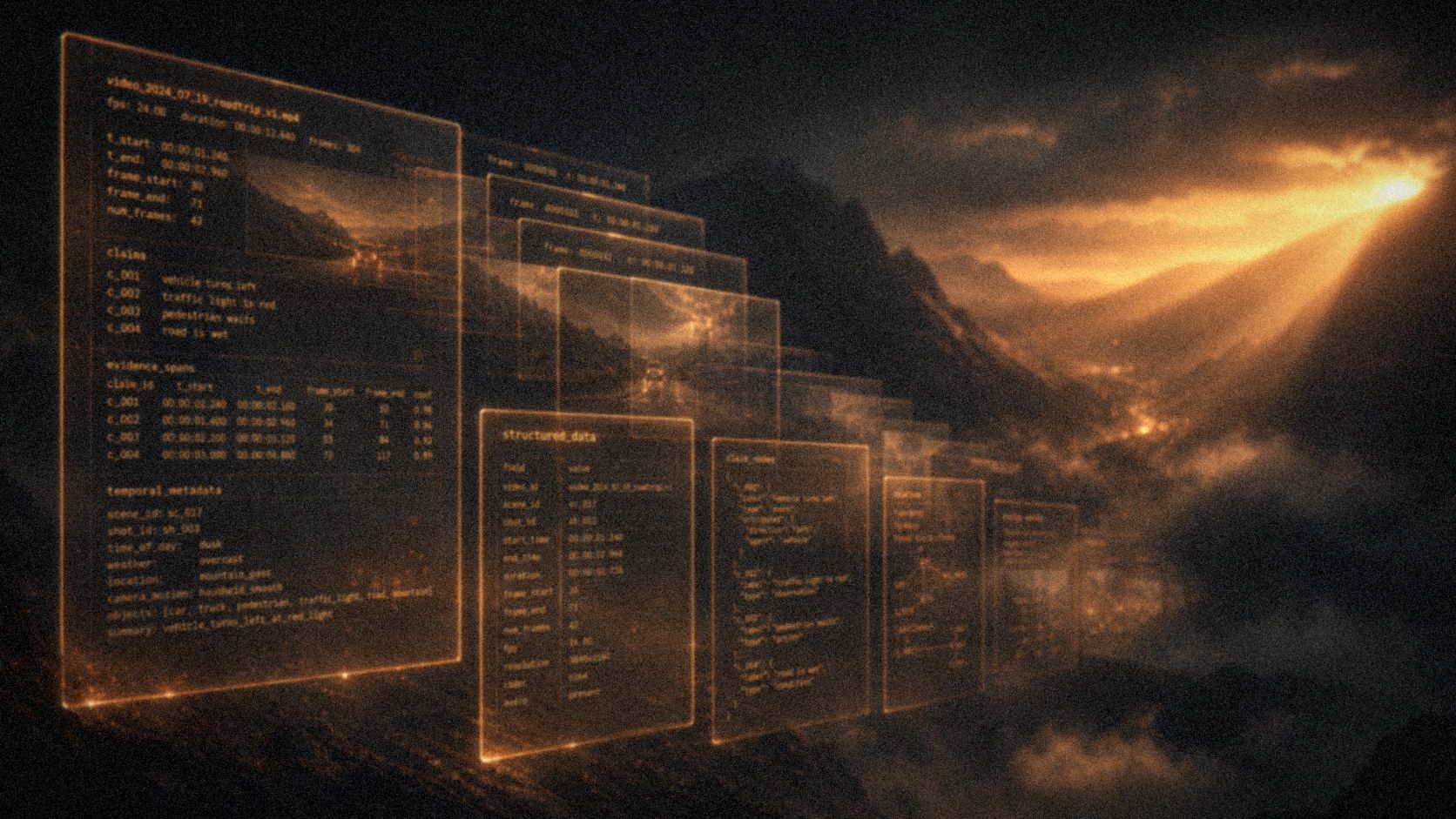
A sales demo intelligence system should ingest the recording, transcribe the audio, read the screen, extract slide text, identify product areas, detect entities, and align everything to timestamps.
Then it should produce structured deal intelligence:
- Objections
- Competitor mentions
- Pricing discussions
- Feature requests
- Product areas shown
- Promises made
- Buyer priorities
- Risks
- Next steps
- Follow-up items
- CRM-ready fields
- Evidence clips
- Account-level knowledge graph
This turns the call into structured data that can be searched, routed, and reused.
One account-level graph, a different question for every team:
“Which deals mentioned SOC 2 this month?”
“Which competitors are coming up in enterprise demos?”
“Which calls mentioned pricing but have no CRM pricing note?”
“Which missing features are blocking late-stage deals?”
That is the difference between recording calls and understanding revenue.
The most important layer: promises and proof
One of the highest-value use cases is detecting what was promised.
In B2B sales, promises matter.
“Yes, we can support custom approval workflows.”
A manual workaround.
“Implementation takes two weeks.”
The slide says typical rollout: six to eight weeks.
“Yes, it integrates with your data warehouse.”
No integration details are shown.
A verbal price is given for the deal.
It differs from the number in the pricing deck.
These moments create risk. They affect trust, implementation, legal review, customer success, and renewals.
A multimodal system can identify the promise, connect it to the visual evidence, assign a confidence score, and route it to the right team.
This is valuable for sales management, but also for product, legal, customer success, and RevOps.
From call notes to revenue graph
The real opportunity is not just better summaries. It is a revenue knowledge graph.
A graph can connect:
- Account to pain point
- Pain point to product feature
- Feature to demo segment
- Objection to competitor
- Competitor to talk track
- Promise to owner
- Next step to deadline
- Pricing discussion to deal stage
- Buyer stakeholder to decision process
Over time, this creates a living map of customer intent.
The company learns what buyers actually ask for, what reps actually say, what competitors actually appear, and which moments actually move deals forward.
This can improve:
- CRM hygiene
- Forecast accuracy
- Sales coaching
- Product roadmap input
- Competitive intelligence
- Customer success handoffs
- Renewal preparation
- Deal risk detection
The call becomes more than a record. It becomes a structured source of revenue intelligence.
Why now
Sales teams already record calls. The next step is extracting the full signal.
Traditional conversation intelligence helped teams move from memory to transcripts. Multimodal AI moves the workflow from transcripts to evidence.
Not just what was said. What was shown. What was promised. What was missed. What changed the deal.
That is the layer most CRMs do not have.
The future of sales demos
The best sales teams will not rely on manual notes to understand their pipeline.
They will convert every demo into structured account intelligence. They will connect objections to product gaps, promises to implementation risk, competitor mentions to enablement, and next steps to CRM automation.
The CRM will still matter. But it will be fed by richer, more accurate data from the conversations and demos where buying decisions actually happen.
Your sales demos already contain the truth.
The next step is making that truth structured, searchable, and actionable.
Turn sales demos into CRM-ready insights with timestamped evidence, objection tracking, promise detection, and account-level knowledge graphs.